
SEO Services in UAE: What They Include, What They Cost, and How to Choose the Right Partner
Need SEO services in UAE? Learn what's included, how pricing works, and how to rank in Dubai and Abu Dhabi on Google and AI search.
Read article → Get a Free Quote
Blog/SEO
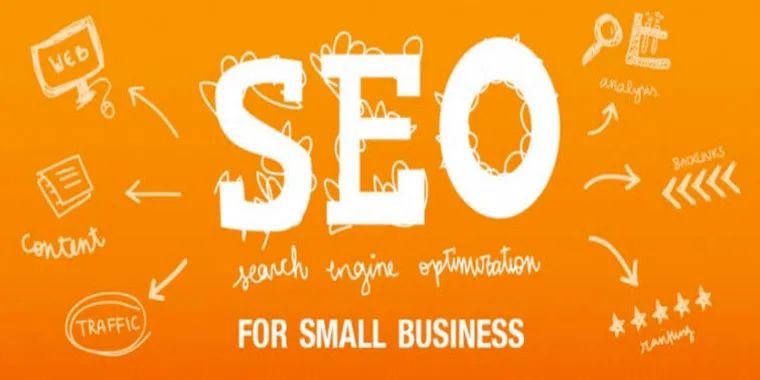
Yes SEO absolutely works for small businesses. In fact, small businesses often benefit more from SEO than large corporations because local and niche searches have far less competition.
But here is the honest part most agencies will not tell you: SEO is not a magic switch. It requires the right strategy, consistent effort, and realistic expectations. When done correctly, SEO becomes your most powerful and cost-effective source of new customers delivering leads 24/7 without paying for every click.
This guide breaks down exactly how SEO works for small businesses, how long it takes, and what steps you need to take to start seeing real results in 2026.
SEO (Search Engine Optimization) is the process of improving your website so it appears higher in Google search results when potential customers search for your products or services.
For a small business, this means:
Every day, billions of searches happen on Google. The businesses that appear on the first page capture the majority of those clicks — and the revenue that follows.
According to recent data, the first result on Google receives over 27% of all clicks, while the second page gets less than 1%. If your business is not on page one, you are virtually invisible online.
Many small business owners are skeptical. They have heard promises before. So here is the honest evidence:
Studies consistently show that 76% of people who search for something nearby on their phone visit a business within a day, and 28% of those searches result in a purchase. Local SEO directly drives foot traffic and phone calls.
People who find your business through organic search are actively looking for what you offer. This makes SEO traffic significantly more valuable than passive social media traffic. Organic visitors convert at higher rates because they have buying intent.
Unlike paid advertising — where larger companies simply outbid you — SEO rewards relevance, quality, and consistency. A well-optimized small business website can outrank major competitors for local and niche keywords where big brands do not focus their efforts.
This is the most common question — and the answer requires honesty.
| SEO Type | Typical Timeline |
|---|---|
| Google Business Profile (Local SEO) | 30 to 90 days |
| Long-tail keyword blog content | 3 to 6 months |
| Competitive service pages | 6 to 12 months |
| National competitive keywords | 12 to 18 months |
The good news for small businesses: local SEO and long-tail keywords show results much faster than competitive national terms. A well-optimized Google Business Profile alone can start generating calls within 30 to 60 days.
Most small businesses compete locally — not nationally. Ranking for “bakery in Denver” is far easier than ranking for “bakery.” Local searches have far less competition, which means faster rankings and more targeted traffic.
Large companies target broad, expensive keywords. Small businesses can dominate specific, lower-competition phrases like “affordable family dentist in Brooklyn” or “custom kitchen cabinets Austin Texas.” These searches have high buying intent and minimal competition.
Google’s algorithm actively promotes local businesses in map results and local pack listings. If you operate in a specific city or region, Google wants to show users nearby businesses — which works in your favor.
Unlike paid ads that stop the moment you stop spending, SEO content keeps working months and years after publication. A blog post written today can still be generating leads for your business three years from now.
Appearing on the first page of Google signals credibility to potential customers. Most people trust Google’s judgment — if your business appears at the top, customers assume you are a reputable choice.
A well-executed SEO strategy allows a small business to compete directly with larger companies — and often win — in local and niche search results. Budget matters far less than quality and consistency.
Let us look at a simple comparison:
| Marketing Method | Cost Per Lead | Longevity |
|---|---|---|
| Google Ads (PPC) | $20 to $100+ | Stops when budget runs out |
| Facebook Ads | $10 to $50 | Stops when budget runs out |
| SEO (Organic) | $0 to $5 long-term | Compounds and grows over time |
SEO has the highest return on investment of any digital marketing channel over a 12-month period. The upfront investment in time and strategy pays for itself many times over as organic traffic builds.
A small business spending $500 per month on SEO that generates even 5 to 10 new customers monthly — depending on the business type — can see returns of $5,000 to $50,000 or more in new revenue.
Your Google Business Profile is the single most impactful free tool available to small businesses. A fully optimized profile can place your business in the local map pack — appearing above regular search results for local queries.
Key actions:
Do not try to rank for broad terms immediately. Focus on specific, location-based phrases where competition is lower and buying intent is higher.
Examples of smart local keyword targeting:
Google’s 2024 and 2025 algorithm updates reward what they call “helpful content” — material that genuinely answers user questions and demonstrates real expertise.
For small businesses, this means:
Technical SEO does not require a developer in most cases. Focus on:
Get your business listed consistently across online directories:
Consistent Name, Address, and Phone Number (NAP) information across all listings strengthens your local SEO significantly.
Reviews are one of the most powerful local ranking factors. After every completed job or service, ask satisfied customers to leave a Google review.
Even 10 to 20 genuine five-star reviews can dramatically improve your local rankings and conversion rates.
The honest answer: both work, but for different goals.
| Goal | Best Channel |
|---|---|
| Results this week | Paid Ads |
| Sustainable long-term growth | SEO |
| Building brand authority | SEO |
| Testing a new offer quickly | Paid Ads |
| Reducing customer acquisition cost over time | SEO |
For most small businesses with limited budgets, the ideal approach is to use paid ads for immediate leads while simultaneously investing in SEO for long-term growth. Over time, as SEO kicks in, dependence on paid ads decreases — and so does the cost of acquiring each new customer.
Avoid these pitfalls that prevent small businesses from seeing results:
Targeting keywords that are too competitive — Start with local and long-tail keywords before going after broad terms.
Expecting results in two to four weeks — SEO requires patience. Most businesses see meaningful results within three to six months.
Ignoring Google Business Profile — This free tool is often the fastest path to local visibility and is consistently overlooked.
Publishing thin, low-quality content — Google’s algorithm actively filters out unhelpful content. Every piece you publish should genuinely help your target audience.
Inconsistent effort — Publishing five blog posts and stopping does not work. SEO rewards consistency over time.
Does SEO work for very small businesses with no budget?
Yes. Many of the most powerful SEO tactics — optimizing your Google Business Profile, collecting reviews, and creating helpful content — are completely free. A small business with zero budget can still see significant results by focusing on these fundamentals consistently.
How much does SEO cost for a small business?
Costs vary widely. DIY SEO costs only your time. Professional SEO services typically range from $500 to $2,500 per month for small businesses, depending on the market and competition level. The return on investment, when executed correctly, almost always exceeds the cost within 12 months.
Can a small business do SEO without hiring an agency?
Absolutely. Many small business owners successfully manage their own SEO by learning the fundamentals, optimizing their Google Business Profile, publishing helpful content consistently, and building local citations. An agency accelerates results but is not always necessary — especially in the early stages.
Is local SEO different from regular SEO?
Yes. Local SEO focuses specifically on ranking in searches that include a location or searches where Google shows local results. It involves optimizing your Google Business Profile, building local citations, and targeting location-specific keywords. For most small businesses, local SEO is the most important and fastest-returning form of SEO.
Does SEO work for service-based businesses?
Yes — service businesses are actually among the biggest beneficiaries of SEO. When someone searches “electrician near me” or “accounting firm in Dallas,” they have strong buying intent and are ready to hire. Ranking for these terms consistently delivers highly qualified leads.
How do I know if my SEO is working?
Track these key metrics monthly using free tools like Google Search Console and Google Analytics: organic traffic growth, keyword ranking improvements, number of Google Business Profile calls and direction requests, and new leads or sales attributed to organic search.
Yes — unequivocally.
SEO is one of the most powerful, cost-effective, and sustainable marketing strategies available to small businesses in 2026. It requires patience, consistency, and the right approach but the businesses that commit to it consistently gain a compounding advantage over competitors who rely solely on paid advertising.
The best time to start SEO was twelve months ago. The second best time is today.
If you are ready to get your small business ranking on Google and generating consistent organic leads, contact Nextechforce for a free SEO consultation. We specialize in helping small businesses rank higher, attract more customers, and grow sustainably through proven SEO strategies.
Need SEO services in UAE? Learn what's included, how pricing works, and how to rank in Dubai and Abu Dhabi on Google and AI search.
Read article →
What is SERP insight link insertion and how does it work? This complete guide explains everything — from finding the right pages to placing contextual links that actually move your Google rankings in 2026.
Read article →
Looking for WordPress SEO tips for beginners? This complete guide covers everything — from basic setup to advanced optimization — to help your site rank higher on Google in 2026.
Read article →Join our community and keep up with everything happening in the tech world. We'll deliver insights, news, and tips straight to your inbox.